History of Istanbul
Three Empires, One City
Istanbul stands as one of humanity's most historically significant cities, with a legacy spanning nearly 3,000 years. Few urban centers in the world can claim to have been the capital of three successive world empires—the Roman (later Byzantine), Latin, and Ottoman—each leaving an indelible mark on the city's physical and cultural landscape.
Byzantium: The Greek Colony
The city's story begins around 667 BCE when Greek colonists from Megara, led by King Byzas, established a settlement on the European side of the Bosphorus. This strategic location at the mouth of the Black Sea provided control over the vital waterway and flourishing trade routes. Named Byzantium after its founder, the colony prospered for centuries as an independent city-state before being incorporated into the Roman Empire.
Constantinople: The New Rome
The city's destiny changed dramatically in 330 CE when Emperor Constantine the Great chose it as the site for his "New Rome," officially named Constantinople. As the Western Roman Empire declined, Constantinople rose as the magnificent capital of the Eastern Roman (Byzantine) Empire for over a millennium. Under Emperor Justinian I (527-565 CE), the city reached its golden age with the construction of architectural marvels like the Hagia Sophia, whose innovative dome design revolutionized architecture and remained unsurpassed for nearly a thousand years.
Constantinople stood as Christendom's greatest city throughout the Middle Ages, withstanding numerous sieges by various forces including the Persians, Arabs, Bulgars, and Rus. The city's elaborate defenses, particularly the massive Theodosian Walls, protected its wealth and knowledge. As a center of learning, Constantinople preserved classical Greek and Roman texts that would otherwise have been lost, later contributing significantly to the European Renaissance.
The Fourth Crusade in 1204 brought a devastating blow when Western European crusaders sacked the city and established the Latin Empire. Though the Byzantines reclaimed their capital in 1261, the empire never fully recovered its former glory.
Ottoman Istanbul: The Imperial Capital
The Byzantine era ended on May 29, 1453, when 21-year-old Ottoman Sultan Mehmed II (later known as "the Conqueror") captured Constantinople after a 53-day siege, using revolutionary cannon technology to breach the once-impregnable walls. Rather than destroying the city, Mehmed set about revitalizing it as the capital of the rising Ottoman Empire.
Under Ottoman rule, the city—gradually becoming known as Istanbul—experienced a remarkable renaissance. Sultan Mehmed and his successors embarked on ambitious building programs, converting some Byzantine structures while constructing new mosques, palaces, bazaars, and public works. The skyline transformed with elegant minarets and domes designed by master architects like Mimar Sinan, whose innovative structures define the city to this day.
For nearly five centuries, Istanbul served as the political, cultural, and commercial heart of the vast Ottoman Empire spanning three continents. The Topkapı Palace housed the imperial court, while the Grand Bazaar and Spice Bazaar established the city as a global trading hub. Under Süleyman the Magnificent (1520-1566), the Ottoman Empire reached its zenith, with Istanbul growing into one of the world's largest and most cosmopolitan cities.
Modern Transformations
The 19th century brought significant modernization efforts as the Ottoman Empire sought to keep pace with European powers. The Tanzimat reforms introduced Western-inspired institutions, while the city's physical landscape expanded beyond the historic peninsula with new European-style districts like Pera (modern Beyoğlu).
Following World War I and the Turkish War of Independence, the Ottoman Empire dissolved, and the capital moved to Ankara in 1923. Though no longer a political capital, Istanbul remained Turkey's cultural and economic center. Under the Turkish Republic, particularly from the mid-20th century onward, the city experienced explosive growth, expanding far beyond its historic core to become the megacity of over 15 million inhabitants we see today.
Throughout these transformations, Istanbul has maintained its unique character as a living museum where layers of history coexist. Roman cisterns, Byzantine churches, Ottoman mosques, and modern skyscrapers stand side by side, creating a unique urban landscape that continues to evolve while honoring its extraordinary past.
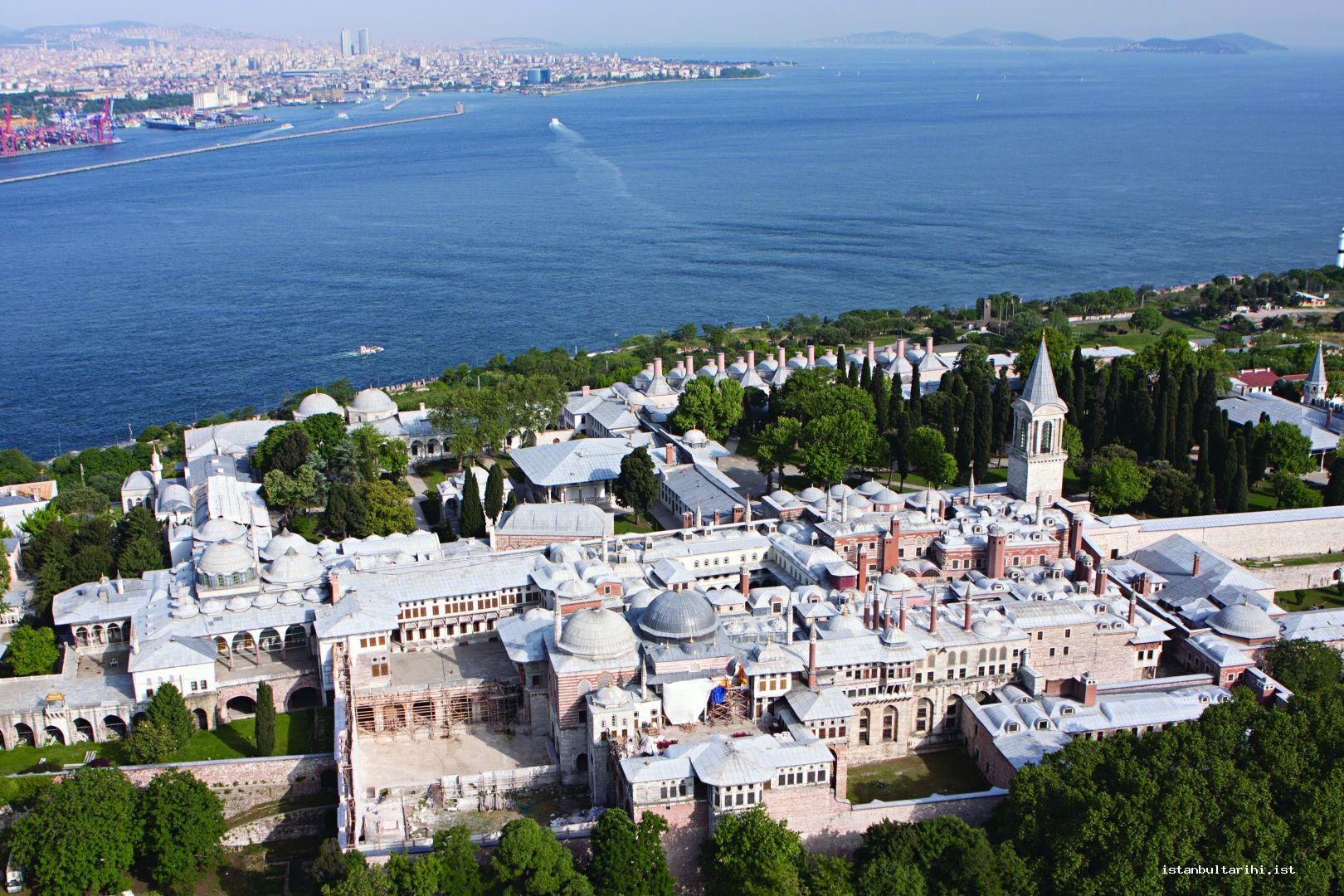
Topkapi Palace
The imperial residence of Ottoman sultans for centuries, rich in history and culture.
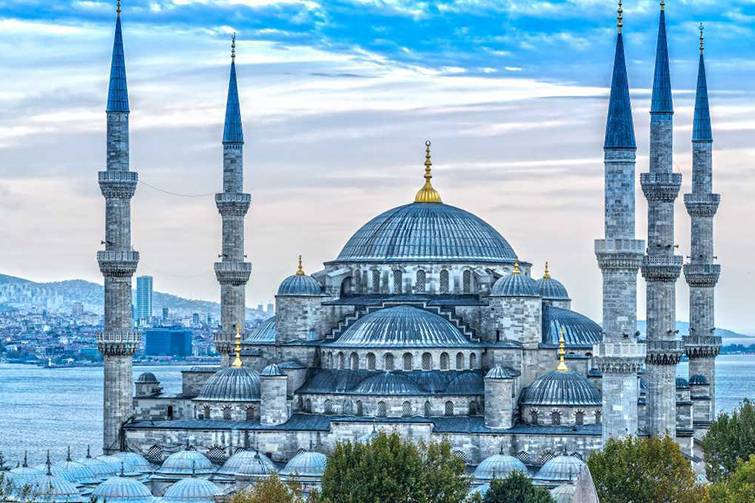
Blue Mosque
Known as Sultanahmet Mosque, it's an iconic symbol of Istanbul with stunning architecture.